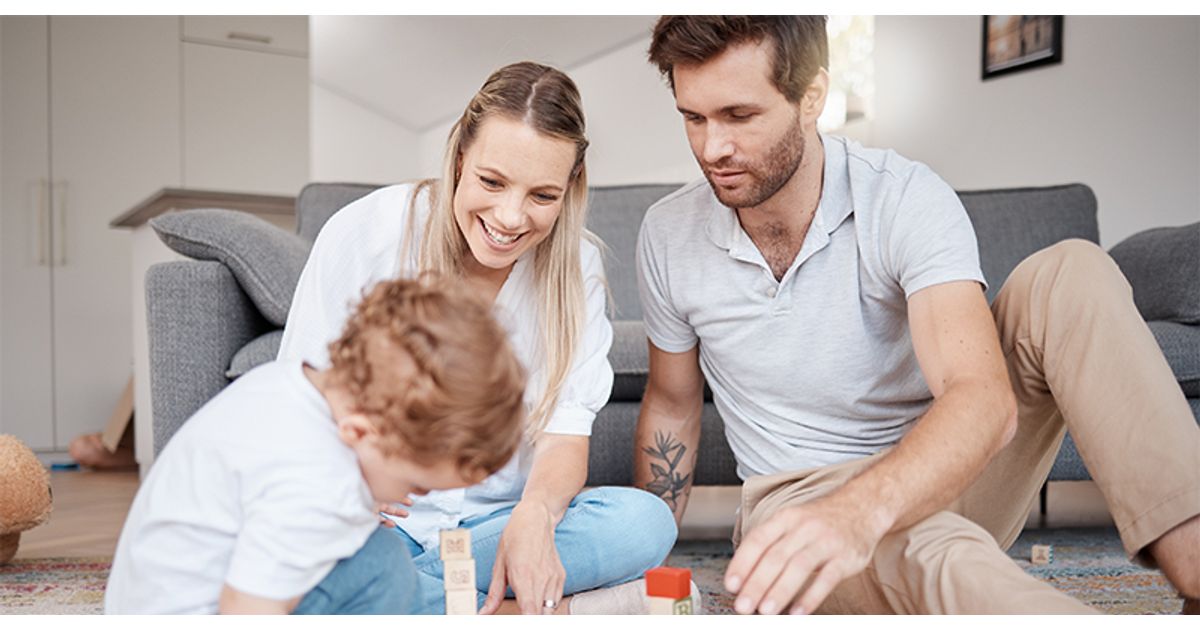
Play helps children think creatively, solve problems, build friendships, express emotions, develop motor skills, and understand the world around them. Even simple activities – such as pouring water, cooking in the play kitchen, or climbing outdoors – support brain development and boost confidence. In our daycare, play-based learning is at the core, because children learn best when they feel safe, curious, and engaged.
How Parents Can Support Play at Home
Parents play a key role in their children’s development – and it doesn’t require special toys or complicated setups. Here are simple, effective tips to encourage play at home:
Create a Play-Friendly Environment
Set up a small area with easily accessible toys and materials such as building blocks, crayons, books, puzzles, and everyday objects. Children who can choose what to play with feel more independent and curious.
Follow Your Child’s Interests
If your child loves cars, animals, drawing, or pretend play, build on these interests. When you follow their curiosity, they stay engaged, learn longer, and enjoy playing more.
Use Everyday Moments for Learning
Cooking, folding laundry, going for walks, gardening, or tidying up toys all support development. Talk about shapes, colors, numbers, and new words – this strengthens language and thinking skills.
Ask Open-Ended Questions
Instead of “What color is this?” try:
“What do you think will happen if…?”
“How did you build this?”
“What should we try next?”
These questions encourage creativity, problem-solving, and communication.
Prioritize Outdoor Play
Nature offers endless learning opportunities: climbing, running, exploring different surfaces, observing insects, collecting leaves. Outdoor play supports motor skills, confidence, and emotional regulation.
Play Together – Even for Just 10 Minutes
Children value connection more than perfect activities. A short play session, a story, a dance, or building together can greatly support development.
Limit Screen Time and Encourage Real Play
Screens can be useful in moderation, but hands-on play creates deeper learning experiences and supports imagination, language, and social skills.
Growing Through Play
At Kinderkrippe.ch, we believe that play is the most natural form of learning. When parents and educators support playful exploration together, children grow confidently – emotionally, socially, physically, and cognitively.